Church & Club Floor Sanding Services in East Barnet
In the heart of East Barnet EN4, places of worship and community clubs carry more than just timber underfoot. From the historic Church of St Mary the Virgin on Church Hill Road to East Barnet Baptist Church on Crescent Road, Brookside Methodist Church on Cat Hill, and the various club and community halls serving residents around Oak Hill Park and the village high street, wooden floors see constant use. Regular services, community events, toddler groups, fundraising evenings and club meetings all take their toll.
Scratches, worn coatings, loose boards, gaps that collect dirt, and surfaces that have lost their grip create both practical and safety concerns. For church committees, club secretaries and property managers, the challenge is restoring these floors without lengthy closures or excessive disruption. That is where specialist church floor sanding in East Barnet makes a real difference.
Why Church and Club Floors Need Specialist Attention
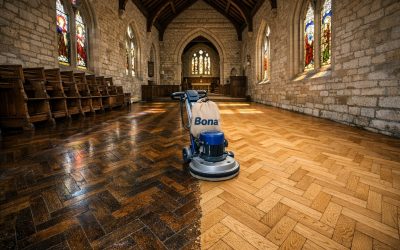
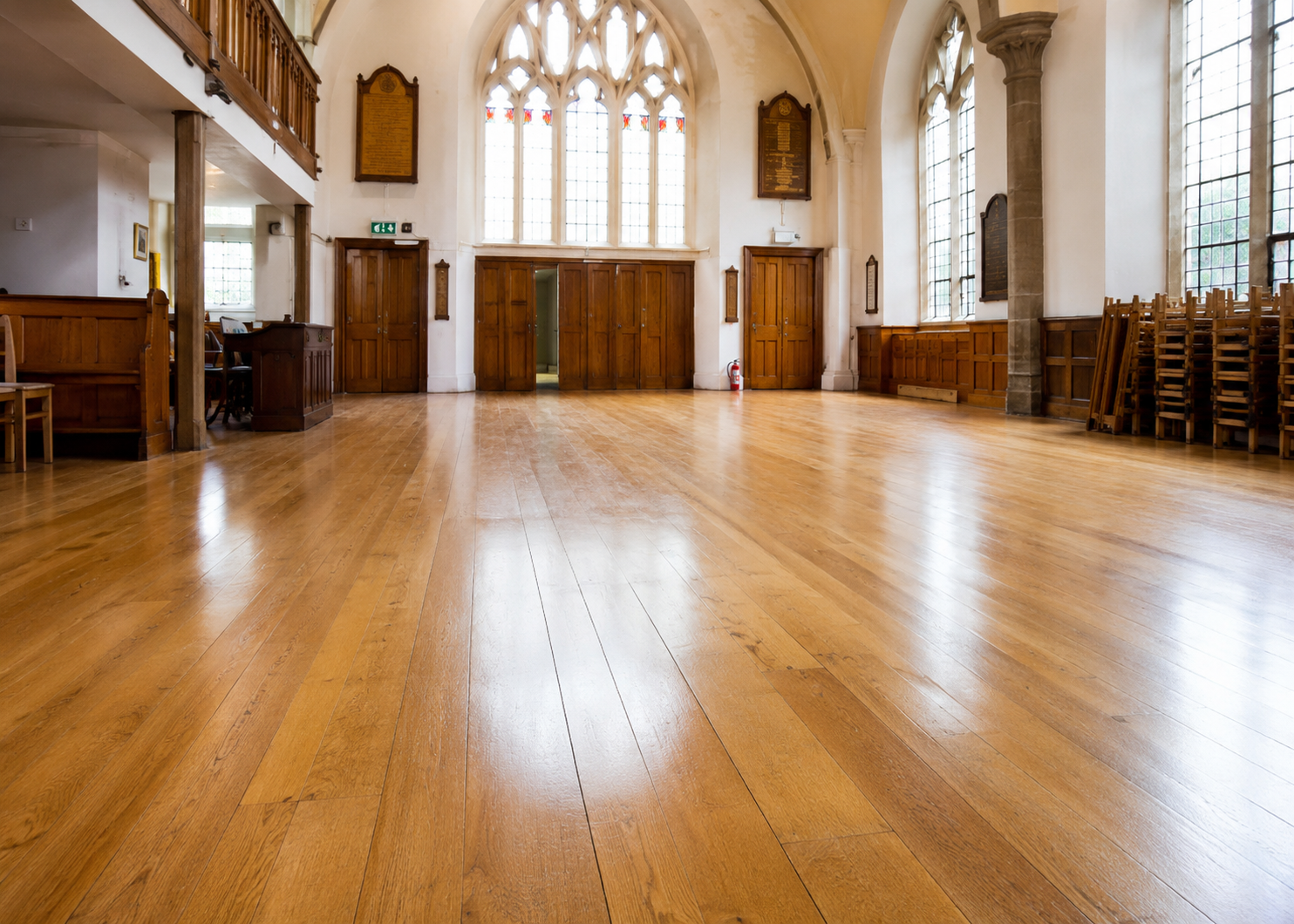
Church and club floors in East Barnet often combine original softwood or hardwood boards with parquet or later engineered sections. Decades of foot traffic, chairs scraped across surfaces, spillages and successive layers of old varnish or polish leave them looking tired and, in places, unsafe. Heritage character matters too — especially in older buildings near the East Barnet Village conservation area — so the finish must respect the building while delivering commercial-grade durability.
A professional restoration addresses the full picture: timber condition, structural soundness of boards, gap filling, complete removal of failed coatings, and a protective system chosen for the level of use. Whether the space is a nave, side chapel, main hall or smaller meeting room, the goal remains the same: a clean, even, hard-wearing surface that looks cared for and lasts.
Our Church & Club Floor Restoration Process
1. Initial Assessment and Planning
Every project begins with a clear understanding of the floor and the building’s needs. We examine the timber for wear, previous treatments, loose or damaged boards, moisture issues and any areas of particular concern. Measurements, photographs and, where helpful, video can form the basis of a detailed quotation. For many clients a site visit remains the most accurate route, especially when working around listed or sensitive interiors.
We discuss practical constraints — service times, club meeting schedules, access for equipment, and any heritage considerations — so the programme of work is realistic and minimises disruption. This stage also allows us to recommend the most suitable finish for the expected traffic and cleaning regime.
2. Repairs, Board Replacement and Gap Filling
Loose parquet blocks, cupped or split floorboards, and missing sections are dealt with before sanding begins. Matching timber is sourced wherever possible so repairs blend rather than stand out. Gaps are filled using techniques appropriate to the floor type — resin and wood-dust mixes for many traditional boards, or specialised systems for parquet — reducing draughts, improving appearance and preventing dirt build-up. These preparatory repairs form the foundation of a lasting result and are an essential part of proper church floor restoration in East Barnet.
3. Sanding and Surface Preparation
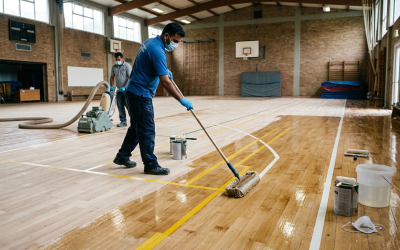
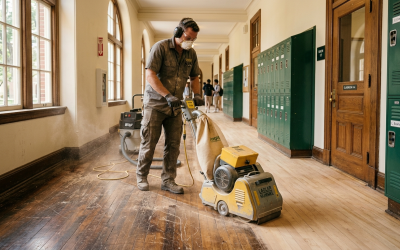
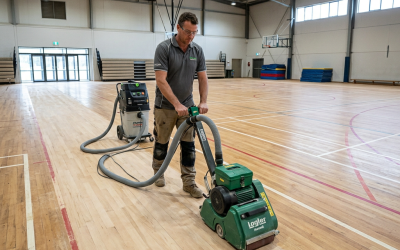
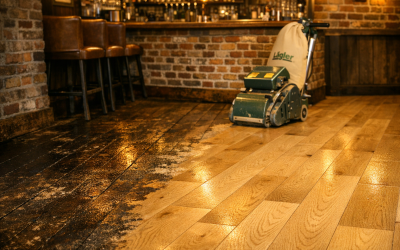
Dust-controlled machinery captures the vast majority of dust at source, protecting the interior of the church or club and neighbouring spaces. Progressive grits remove old coatings, level the surface and prepare a smooth, even base ready for finishing. Edges, corners and any intricate detailing around fixed furniture or architectural features receive the same careful attention. The result is a clean, uniform surface free of the ridges and residue that undermine lesser work.
4. Finishing Options
The choice of finish depends on the floor’s use, the desired appearance and maintenance preferences.
- Commercial-grade lacquers (including systems from Bona and Junckers) provide tough, clear protection ideal for high-traffic halls and aisles. Two-component (2K) options deliver particularly hard-wearing performance with good chemical resistance.
- Hardwax oils such as those from Osmo offer a more natural look and feel, with the ability to refresh localised areas without a full re-sand.
- Traditional oils enhance the grain while remaining repairable.
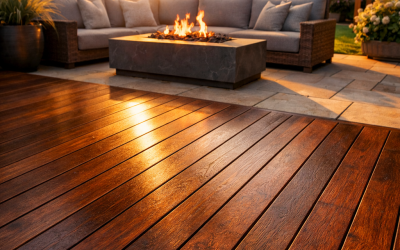
We also use professional systems from Loba where their specific performance characteristics suit the project. Sheen levels range from ultra-matt to satin so the finished floor complements the building rather than competing with it. Multiple coats are applied with proper drying times observed, ensuring full cure before the space returns to regular use.
5. Aftercare and Ongoing Maintenance
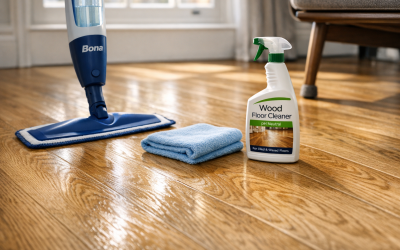
A restored floor is an investment. We provide straightforward aftercare advice tailored to the finish chosen — recommended cleaning products, frequency of maintenance, and when a simple recoat may be preferable to full re-sanding. For clubs and churches with regular events, a planned maintenance schedule keeps the surface looking its best and extends the interval between major works.
Experience You Can Rely On
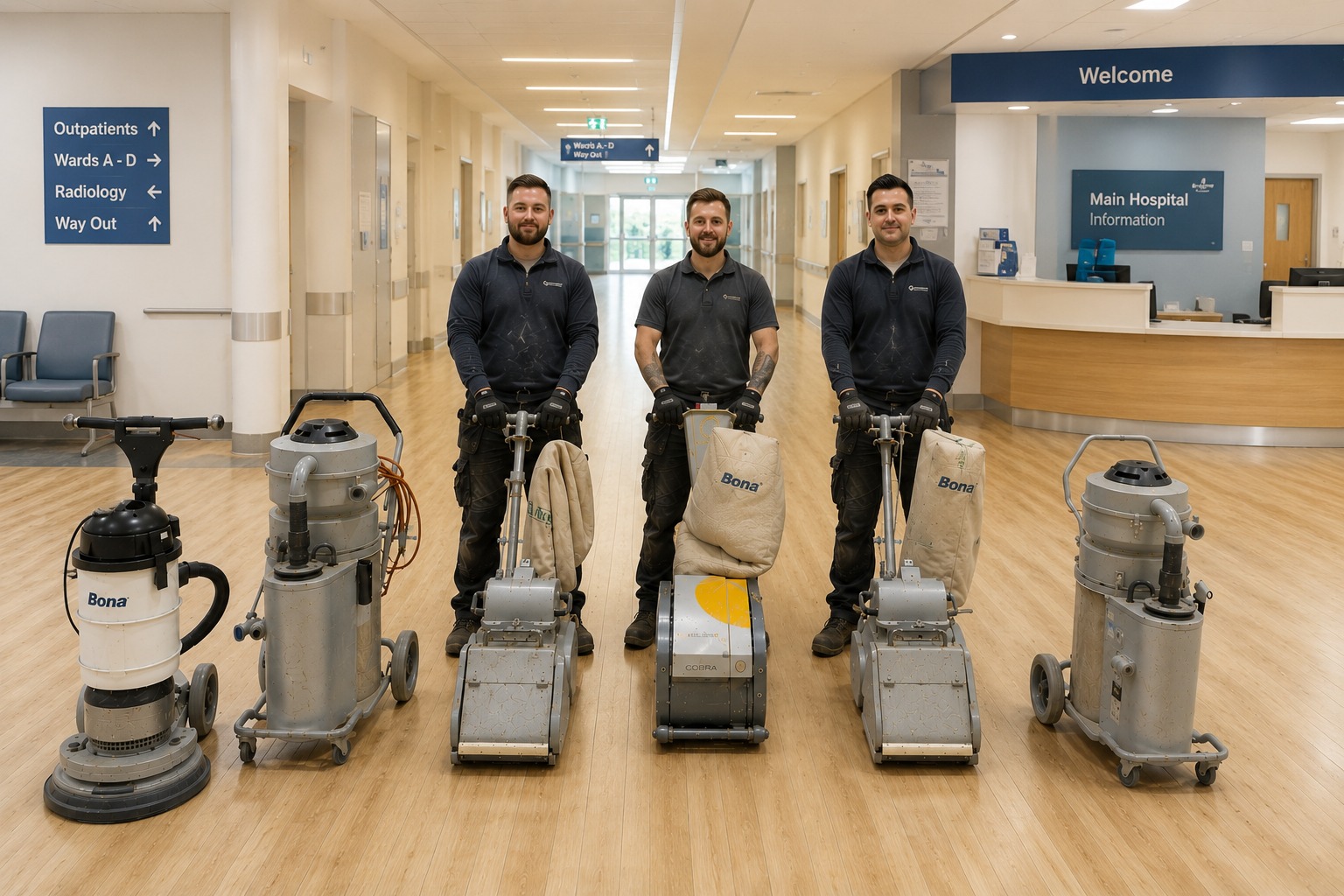
As a family firm with decades of hands-on work across East Barnet and the wider Barnet area, we bring practical knowledge of both modern commercial requirements and the sensitivities of older buildings. Dust-controlled equipment, safe working practices, flexible scheduling around services and meetings, and premium professional products are standard. Quotes are clear and based on the actual condition of the floor — whether assessed from photographs and measurements or a full site visit.
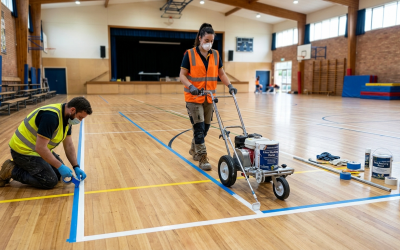
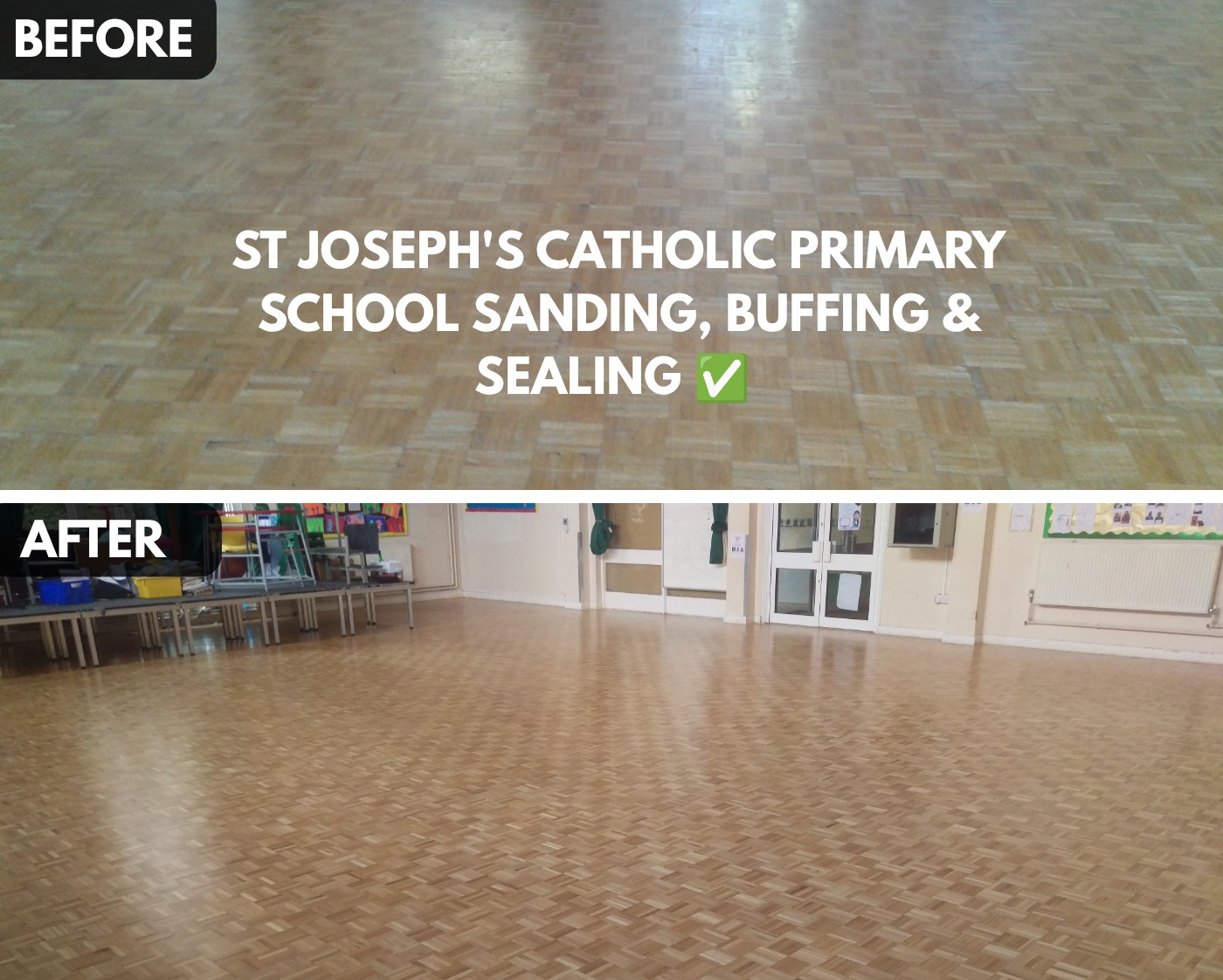
Our work on school floors in the area (see our school floor varnishing, boarding school floor sanding and school hall line marking pages) has given us particular experience of high-traffic public interiors that must reopen quickly and safely. The same disciplined approach applies to churches and clubs. You can also view examples of completed work in our gallery.
Frequently Asked Questions
How long does church or club floor sanding usually take in East Barnet?
Most projects in typical church halls or club rooms take between two and five days, depending on the size of the area, the condition of the timber, and the number of coats required. We plan the schedule carefully around services, meetings and public access so disruption is kept to a minimum.
Will the sanding process create a lot of dust in the building?
No. We use modern dust-controlled machinery that captures the vast majority of dust at source. This is especially important in churches and community buildings where cleanliness and air quality matter. The working area is left tidy at the end of each day.
Can you work around church services and club meeting times?
Yes. Flexible scheduling is a standard part of our service. We discuss the building’s calendar in advance and arrange work during quieter periods, evenings or mid-week slots wherever possible so regular activities can continue with the least interruption.
What types of timber floors do you restore in churches and clubs?
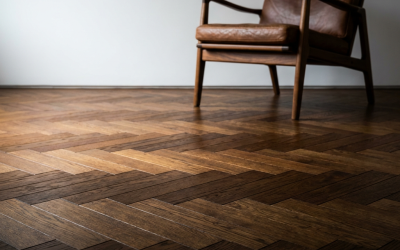
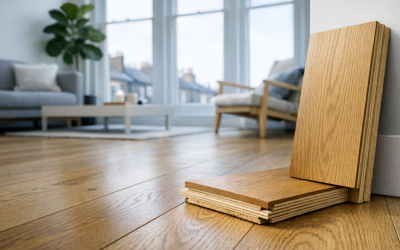
We handle solid floorboards, parquet (including herringbone and mosaic patterns), engineered timber and older softwood floors commonly found in East Barnet churches and community halls. Each floor is assessed individually so repairs and finishes suit the specific timber and level of use.
Do you repair damaged or loose boards before sanding?
Yes. Loose parquet blocks, split or cupped boards, and missing sections are repaired or replaced with matching timber before sanding begins. Gap filling is also carried out where needed to improve appearance, reduce draughts and prevent dirt build-up.
Which finishes are best for high-traffic church and club floors?
For busy spaces we usually recommend commercial-grade lacquers or two-component systems that offer strong wear resistance. Hardwax oils are a good alternative when a more natural look and easier localised maintenance are preferred. We advise on the most suitable option based on footfall and cleaning routines.
Is the finished floor safe for use soon after the work is completed?
Light use is often possible within 24–48 hours depending on the product, but full curing typically takes longer. We provide clear guidance on when furniture can be replaced and when the floor can return to normal heavy use so the space reopens safely.
How should we maintain the floors after restoration?
Simple regular cleaning with the correct products is the most effective approach. We supply aftercare advice tailored to the finish used, including recommended cleaners and when a light recoat may be more practical than a full re-sand in the future.
Can you provide a quotation from photographs or a site visit?
Yes. Many clients start by sending clear photographs or a short video, which allows us to prepare an initial estimate. For larger or more complex floors a site visit is recommended so measurements and condition can be checked accurately before work begins.
Do you have experience with heritage or older church buildings in the East Barnet area?
Yes. We regularly work on floors in traditional and older community buildings across East Barnet and the surrounding area. Care is taken to respect the character of the timber while delivering a durable, practical finish suitable for ongoing public use.

Ready to Restore Your Floors?
If your church or club floors in East Barnet are showing their age, the next step is simple. Call us on 0800 335 7565 for a straightforward conversation about your requirements. Send photographs or a short video of the floors, or request a site visit. As an experienced church floor sanding contractor in East Barnet, we will provide a clear quotation and practical advice based on the condition and use of your timber.
Whether you need a full restoration of a main hall, careful work in a side room, or advice on maintaining existing finishes, we are here to help keep these important community spaces looking cared for and fit for purpose.